
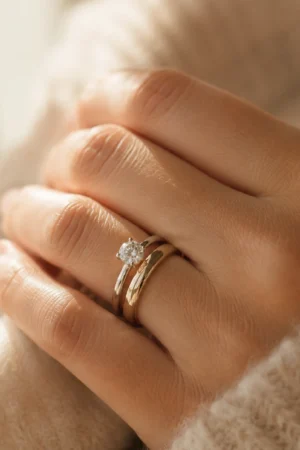

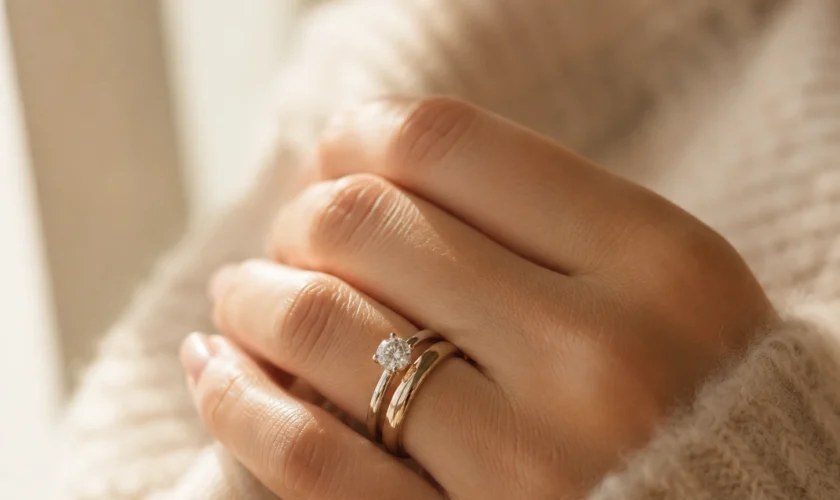
Most people think a custom ring is only about getting a look no one else has. The practical payoff matters too: the design can suit the hand and the stone while accounting for the budget and years of daily wear.
Fit starts with the hand, not the size number
Finger shape changes how a ring feels more than most buyers expect. A short finger with a wide knuckle needs a different inside profile than a long slim finger, and a ring that spins or pinches won’t get worn much. Off-the-shelf sizes work for a lot of people, yet they are built around average proportions. A custom design lets the band’s width and thickness, along with its inside curve, be set for one hand.
That includes planning for sizing and resizing. A jeweler can measure the finger at the base and at the knuckle, ask whether the hand swells in heat, and allow for the way a wider band fits tighter than a narrow one. If knuckles are large, a slight court profile inside the shank or a small change in width can help the ring slide over without feeling loose once it’s on.
Lifestyle shapes the setting too. Someone who types all day, lifts, gardens, or works with gloves may prefer a low profile that doesn’t catch. A bezel or a low cathedral setting keeps the stone closer to the finger, while a high prong setting lifts it into harm’s way. There isn’t one right answer. Prong, bezel, pavé, and cathedral options can be matched to comfort and daily habits rather than picked from whatever happens to be in the case.
Stone first, setting second
In many ready-made rings, the setting comes first and the stone must fit it. Custom work can flip that order. The buyer picks a diamond or colored gem for its own qualities, then the seat and proportions of the setting are built around that exact stone.
Basic gemology helps here. For diamonds, buyers talk through cut, color, clarity, and carat weight together instead of chasing one grade. Cut and proportions drive how light returns through the top, so a well-proportioned smaller stone can look brighter than a larger stone with poor symmetry. Color and clarity affect price in steps, which can be balanced against size. A custom brief makes those trade-offs visible because the stone is loose before the metalwork starts.
Lab-grown diamonds are now a normal part of that conversation in bespoke jewelry. In many cases they cost less than a natural diamond of similar size and grades, which lets some couples put funds toward cut quality or a thicker shank. Grading and reporting vary by producer and lab, as does pricing, so it doesn’t help to assume all reports or prices line up. Comparing the actual stone’s grading document and measurements helps buyers decide which traits matter most in person.
Metal choice is a maintenance decision too
Metal color gets the attention, but upkeep matters just as much. Platinum, yellow gold, white gold, and rose gold each behave differently over time, and the alloy mix plus the design affect hardness and wear more than the metal name alone.
Platinum is naturally white and doesn’t rely on rhodium plating to stay that way. It still scratches and develops a patina, and it needs checks and polishing. White gold is often plated with rhodium for a bright white finish, and that layer wears and is typically replated at intervals. Yellow gold and rose gold don’t need that plating step, though they still scratch and thin with years of wear.
There’s no blanket rule that one jewelry metal is harder or tougher for every ring. A thin shank in any metal will wear faster than a well-supported one, and a high setting takes more knocks than a low bezel. A good designer should explain weight and color stability alongside service needs, and put the choice in writing.
Hallmarking or a purity stamp can indicate the metal’s claimed purity, such as 18k or platinum. It isn’t proof of origin or overall quality. It doesn’t say where the metal came from, how the ring was made, or how well the stone is set. Treat it as one data point, not the whole story.
Budget control comes from trade-offs you can see
A custom ring isn’t automatically cheaper. It can be budget-flexible because the buyer sees where the money goes and can move it around.
Carat weight, color, clarity, metal type, and level of detail all pull the price in different directions. Someone might keep the silhouette simple and put more toward cut quality. Someone else might accept a slightly lower color grade to keep a certain width or add small side stones. Because the quote is built line by line, it’s easier to ask what happens if the center stone drops a little in size or if pavé is swapped for a plain shank.
That flexibility has limits. Complex detail adds bench time, while hand work, tight tolerances, and multiple stones add cost. Changes after approval can affect lead time and price, so couples should ask how revisions are handled and what triggers a new quote. Having the approved design, stone specs, metal, and delivery window recorded before work starts keeps expectations clear. Clear paperwork protects both sides when excitement runs high.
Those decisions come back to the couple’s priorities.
Price talk should stay tied to those priorities, not to pressure. If a certain look needs more metal or more labor to wear well, it’s better to know early and adjust the plan than to thin the ring out to hit a number.
How in-house making changes communication
In-house production means designers and bench workers are in the same place. That doesn’t guarantee a perfect ring, but it does shorten the loop when questions come up about seat depth, prong thickness, or finish.
Lost-wax casting and hand-forging are two common ways to make the basic form. Casting builds the shape from a carved or printed model, while forging shapes metal under pressure. Stone-setting techniques matter just as much, especially for pavé and small melee diamonds where spacing and seat cutting decide whether stones sit evenly and stay put. When designers and makers can look at the same piece together, small issues get caught before they become big ones.
For couples in Perth who want this level of collaboration, working with a studio that designs and produces custom engagement rings in-house means every stage is done by the same people who will stand behind the finished ring.
Ask practical questions before committing. Who will do the setting? Ask about checks before delivery and how approvals are recorded too. The answers tell more about quality control than a label like bespoke on its own.
What preview tools can and can’t do
Computer-aided design, or CAD, is now a normal step in many custom jobs. It lets couples see proportions and profile height, along with the stone layout, on screen and request changes before metal is cut. Some studios also use a wax or resin model for a physical check of scale on the hand.
These tools help, but they have limits. A render doesn’t show exact color or polish, or how light moves through the actual diamond. A sample model may feel different from finished metal. Screens flatten depth, and small details like milgrain or engraving rarely read true until they are cut.
That’s why approvals matter. Ask what the design stage includes and how many rounds of changes are covered, including what adds time or cost. Check lead times in weeks rather than vague promises, and don’t assume same-day edits are possible during busy periods. A careful studio will take time at this point rather than rush it.
A personal record that can last
Beyond fit and specs, custom work lets a ring carry a story without shouting about it. That might be a profile line borrowed from a partner’s band, a small engraving inside the shank, or a motif tied to a place the couple cares about. These touches don’t change performance, but they change how the ring feels to own.
Heirloom jewelry adds another layer. Resetting a family diamond or reusing gold from a relative can keep history close. It isn’t always simple. Old cuts may have proportions that need a new seat, worn stones may need recutting or a protective setting, and heirloom metal may need testing before reuse. A jeweler should inspect any stone or metal intended for reuse first and say plainly whether it suits daily wear.
Think about the wedding band fit early too. A high cathedral or a full pavé shank can leave a gap or rub against a straight band. A custom design can leave room by shaping the shank, or include plans for a curved band. Small fit checks now prevent annoying wear later and keep both rings comfortable together.
Local support before and after the proposal
Working with a local independent jeweler changes the experience of owning the ring. Face-to-face talks make it easier to compare stones side by side and try widths on the finger, with a chance to feel the setting’s height in real life. One point of contact helps when the proposal date is fixed and timing is tight.
Aftercare is where that contact pays off. Rings need sizing checks, prong checks, cleaning, and now and then replating or polishing. Ask what is included, what costs extra, and how long service takes. Don’t assume broad promises cover everything. Terms vary, so written details about maintenance, resizing limits, and warranties help set expectations.
Sourcing questions belong in the same talk. A grading report describes a stone’s traits, not its supply chain. If provenance matters, ask for separate evidence for conflict-free claims, recycled content, or certified metals. A clear answer might name the supplier type or show chain paperwork, with an explanation of any limits where paperwork doesn’t exist. Vague claims deserve follow-up questions, and careful studios expect them.
An engagement ring is worn hard. It knocks desks, meets soap and lotion, and goes through heat and cold. No design removes upkeep, yet a ring planned around the hand and the stone, with realistic maintenance expectations, is easier to live with. Custom work done well can mean fewer surprises and clearer choices, leaving a piece of jewelry that still makes sense years after the proposal.